
Osgood-Schlatter: Physical Therapy, Key to a Fast Recovery
Osgood-Schlatter Physical Therapy: Get Your Knee Back Now!
What Is Osgood-Schlatter Disease?
Osgood-Schlatter disease is a painful condition that affects the knee, commonly seen in adolescents during their growth spurts. It is characterized by inflammation of the patellar tendon at the point where it inserts into the tibial tuberosity (a bone just below the knee). This condition is usually caused by repetitive stress on the tendon from sports activities that involve running, jumping, and sudden changes of direction, such as soccer, basketball, or gymnastics.
Typical symptoms include pain, swelling, and tenderness just below the kneecap, which worsen with physical activity and improve with rest. Although it can be alarming for parents and frustrating for young athletes, Osgood-Schlatter is generally a self-limiting condition that resolves once growth stops. However, that does not mean it should be ignored.
Physical Therapy: Your Indispensable Ally in Recovery
While rest is a crucial part of treatment, physical therapy plays a fundamental role in managing symptoms and preventing future recurrences. A well-structured physical therapy program can:
- Reduce pain and inflammation: Through manual therapy techniques, physical modalities (such as ice or ultrasound), and specific exercises, the physical therapist will help relieve the discomfort and swelling in the affected area.
- Strengthen the surrounding muscles: A muscle imbalance in the leg can contribute to stress on the patellar tendon. Physical therapy focuses on strengthening the quadriceps, hamstrings, and calf muscles, which provides greater stability and reduces the load on the knee.
- Improve flexibility: Tightness in the leg muscles, especially the quadriceps, can aggravate Osgood-Schlatter. Stretching exercises and myofascial release are essential to restore muscle length and joint mobility.
- Retrain movement biomechanics: An expert physical therapist will analyze the way you move during your sports activities. They will identify faulty movement patterns that may be contributing to the condition and teach you proper techniques for running, jumping, or landing, minimizing stress on the knee.
- Return safely to sport: Your physical therapist will guide you through a gradual progression program to get back to your sports activities, making sure your knee is ready for the load and minimizing the risk of relapse. This includes agility exercises, plyometrics, and drills specific to your sport.
Why Choose a Specialized Physical Therapist?
A physical therapist experienced in treating Osgood-Schlatter will not only help you overcome the pain, but will also give you the tools and knowledge to keep your knees healthy in the long term. At our practice, we specialize in sports injury recovery for adolescents, using a comprehensive, personalized approach that will allow you to return to your activities with confidence and without pain.
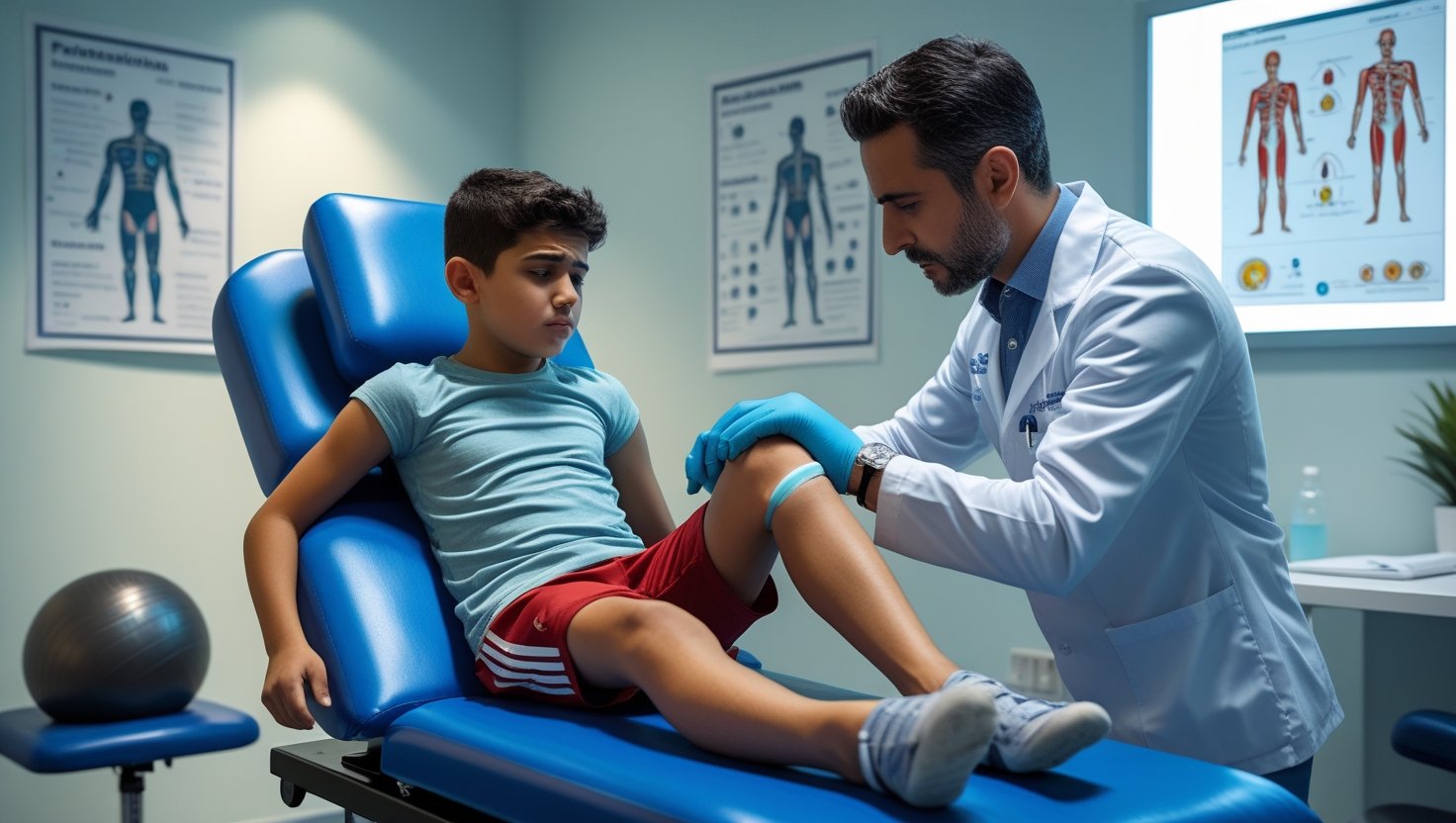
Do not let Osgood-Schlatter pain limit your potential. See a physical therapist to start your path toward a complete, lasting recovery.
Do these symptoms sound familiar? Book your evaluation.
Book via WhatsApp